
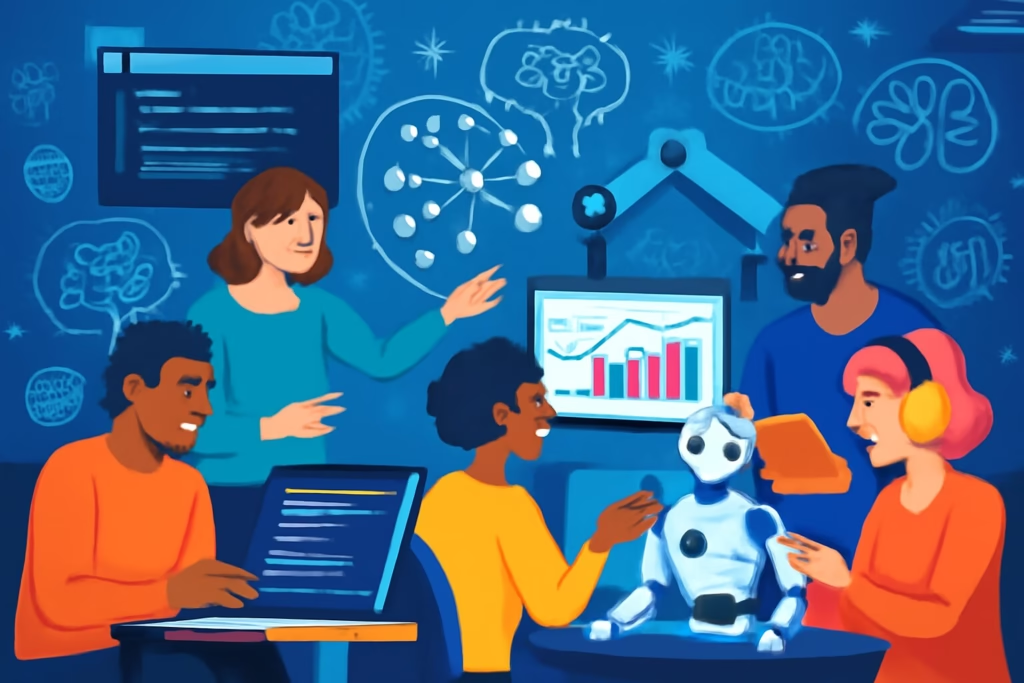
Artificial Intelligence is everywhere today. From chatbots answering questions to cars driving themselves. Curious about “technical AI skills”? This term might sound complex, but it’s simpler than you think. In this guide, we’ll explain what these skills are, why they’re valuable, and how you can start learning them. Whether you’re a beginner, a professional, or an enthusiast, you’ll find clear, actionable insights here. Let’s jump in and explore!
What Are Technical AI Skills?
Technical AI skills are practical abilities for building AI systems. For instance, you code programs. Additionally, you handle data or design models that learn. These differ from soft skills like teamwork or understanding AI ethics. Instead, technical skills focus on the “how-to” of creating AI.
So, what’s AI? It’s technology mimicking human thinking. To make it work, technical skills are key. For example, you might write code to predict trends. Alternatively, you could fix bugs in an AI app. While math like algebra helps, don’t worry—learning happens step by step.
Professionals use these skills daily. Data scientists create prediction tools. Meanwhile, engineers embed AI in apps. Even hobbyists experiment with AI projects at home. Ultimately, these skills empower you to turn ideas into reality.
Why Technical AI Skills Are Essential
AI is transforming industries. For example, it automates repetitive tasks. However, it also creates exciting new jobs. Those with technical AI skills shine in this landscape.
Consider healthcare. AI detects diseases in medical scans. Similarly, in finance, it predicts market trends. Therefore, companies seek experts who can build these systems. By learning technical AI skills, you boost your career.
Moreover, these skills spark innovation. You solve real-world problems. Lifelong learners thrive here, as AI keeps your mind sharp. Meanwhile, enthusiasts find joy in projects like building a personal AI assistant or analyzing sports stats.
Since AI evolves, core skills remain relevant. Start today, and you’ll stay ahead.
Key Technical AI Skills to Learn
Let’s explore the essential skills. Each one builds on the others.
First, programming is crucial. Python leads the pack because it’s user-friendly. With it, you write code for AI tasks. Start with basics like loops or functions.
Next, data handling comes into play. Since AI relies on data, you must clean messy information. Tools like Pandas help. Consequently, you turn raw numbers into meaningful insights.
Then, there’s machine learning. This forms AI’s core. You train models to learn from data. For instance, algorithms like decision trees or neural networks are key.
Additionally, deep learning tackles advanced tasks. It powers image or voice recognition. Libraries like TensorFlow make this easier. As a result, you can build apps that identify faces.
Math and statistics are vital too. Probability and linear algebra explain how models function. However, simple resources can make these approachable.
Cloud computing is another skill. Platforms like AWS host AI models. Learning to deploy online is a game-changer.
Finally, version control with Git tracks code changes. It’s essential for teamwork. Together, these skills create a strong foundation.
How to Develop Technical AI Skills
Begin with small steps. Pick one skill to focus on. Then, practice daily.
Online courses are fantastic. Platforms like Coursera or edX offer free options. For example, try a beginner Python course. Alternatively, books like “Hands-On Machine Learning” provide clear guidance. Read a chapter, then apply it.
Projects build confidence. For instance, code a simple chatbot. Alternatively, use open datasets from Kaggle. Communities like Reddit’s r/MachineLearning offer tips. So, ask questions there.
Free tools like Jupyter notebooks let you experiment. Set goals, like building one model weekly. Meanwhile, challenges arise—code errors can frustrate. However, debugging step by step teaches you a lot.
Stay updated, as AI evolves quickly. Follow blogs, but prioritize core skills first. For a structured approach, check the AI Mastery Plan.
Real-World Applications of Technical AI Skills
Let’s see these skills in action. Netflix uses AI for movie recommendations. Engineers train models using viewing data. Similarly, self-driving cars rely on deep learning. Computer vision skills help them navigate roads.
In healthcare, AI spots cancer in scans. Data scientists clean images and build accurate models. Meanwhile, in gaming, AI creates smart opponents. Programmers code their behaviors.
Businesses use chatbots for customer service. Natural language processing skills make this possible. These examples show the impact. With technical AI skills, you can work in any field.
A tip: Join open-source projects on GitHub. Contributing builds real experience.
Overcoming Challenges with Practical Tips
Learning AI takes time. Don’t rush it. For example, math can feel intimidating. However, platforms like Khan Academy simplify it.
Data privacy is another concern. Therefore, learn AI ethics early. Overwhelm is common too. Instead, focus on one skill at a time.
Try practicing with real data. Kaggle’s contests are great for this. When errors pop up, debug patiently—they teach you the most. Additionally, networking helps. Attend meetups or share ideas online.
For more guidance, explore additional resources. These tips build habits. Enjoy the journey.
FAQs
- What are technical AI skills?
They’re hands-on abilities like coding and data analysis for building AI systems. - Do I need a degree for technical AI skills?
No. Online learning and self-study work well. - How long does it take to learn basic AI skills?
A few months with daily practice. Start with Python. - Are technical AI skills only for tech jobs?
No. They’re useful in healthcare, marketing, and more. - What’s the best language for AI?
Python. It’s simple and powerful. - Can beginners create AI projects?
Yes. Follow tutorials for simple projects. - How do technical AI skills differ from general AI knowledge?
Technical skills involve building AI. General knowledge is about understanding it. - Why learn technical AI skills now?
AI is growing. These skills open career doors.