
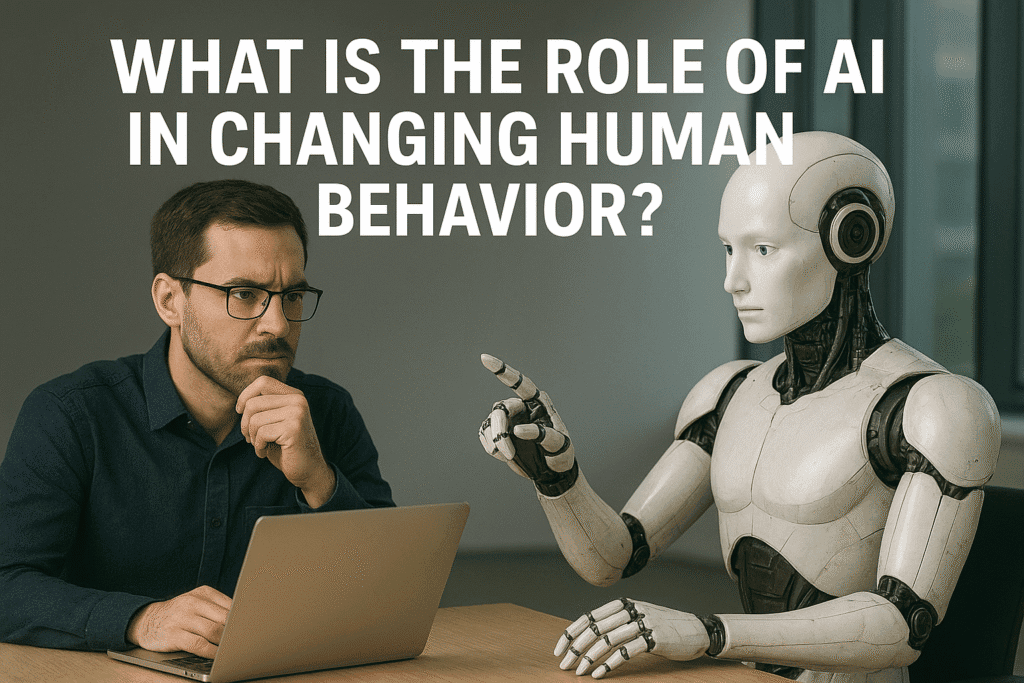
A push notification reminds you to stand up and stretch. A smart app suggests healthier meals based on your past choices. An online platform predicts the next movie you’ll love before you even search for it. These simple moments reveal a powerful truth: AI is not just responding to what we do — it is shaping how we behave.
Artificial Intelligence has become a silent architect of our daily habits, guiding actions in ways both helpful and concerning. Understanding its role is key, because the more we know, the more we can ensure AI serves us, not the other way around.
Let’s explore how AI influences human behavior, the good and the bad, and most importantly, how we can stay in control while using it for growth and improvement.
1. How AI Shapes Human Actions and Choices
Human behavior often depends on what information we see, what options are placed before us, and the convenience of making certain choices. AI plays an active role in all these areas.
- Social media feeds: Algorithms decide which posts you see first, shaping opinions and even emotions.
- Shopping platforms: AI recommends products based on browsing history, subtly influencing purchases.
- Navigation apps: Suggested routes change how we travel and manage time.
- Streaming services: Recommendations guide what we watch, listen to, and eventually enjoy.
Without realizing it, we follow AI-guided paths that gradually reshape habits and decisions.
2. Real-Life Examples of AI Influencing Behavior
AI’s role is visible everywhere once you notice:
- Fitness trackers: Send reminders to walk, exercise, or stay hydrated. Over time, users improve health routines.
- Education tools: Personalize lessons, encouraging students to stay engaged and keep learning.
- Work apps: Suggest the best times to schedule meetings, turning workplaces into more efficient environments.
- E-commerce platforms: “People also bought” prompts drive extra spending by shaping buyer psychology.
- Financial apps: Motivate saving or investing through AI nudges like spend alerts or rewards.
These examples show how AI acts not just as a service, but as a coach that influences how people think and act every day.
3. The Positive Impact: AI as a Force for Good
When used with clear goals, AI can help create better lives.
Some positive outcomes include:
- Healthier lifestyles – Wearables and apps encourage fitness, motivate sleep cycles, and track nutrition.
- Smarter decisions – Data-driven insights reduce guesswork at work and in personal life.
- Access for all – Speech-to-text, translation, and assistive technologies open doors for people with disabilities.
- Improved productivity – AI handles repetitive work so humans focus on creativity and leadership.
- Customized growth – Educational platforms recommend courses suited to each learner’s style, boosting confidence.
When balanced, AI encourages healthier, smarter, and more empowered human behavior.
4. Risks: When AI Shapes Us the Wrong Way
Like any powerful tool, AI’s influence can be both positive and negative.
- Addiction: Social platforms are designed to keep users scrolling, sometimes harming productivity and mental health.
- Echo chambers: Personalized content shows what we already believe, limiting exposure to new perspectives.
- Biased outcomes: If AI learns from unfair data, it can reinforce discrimination or stereotypes.
- Over-dependence: Excessive use of AI risks weakening human skills like memory, creativity, or problem-solving.
- Privacy erosion: Continuous tracking influences not just what we choose, but how free we feel in making choices.
Recognizing these risks ensures we remain aware instead of being unconsciously guided.
5. The Psychology of AI Nudges
AI often changes behavior through small pushes, called “nudges.”
- Health apps: A reminder appears at the right time to take medication.
- Learning platforms: Offer small rewards like badges or celebrations to keep learners motivated.
- Finance apps: A warning about overspending is shown before a purchase decision.
These are not extreme changes but small adjustments that, over time, alter habits. Like a coach, AI influences by guiding, encouraging, and rewarding progress. The big question is: Are these nudges leading us toward healthier lives or just keeping us hooked?
6. How to Use AI for Positive Growth
If AI has such power in shaping behavior, then we must use it intentionally. Here’s how:
- Set personal goals – Use AI for fitness, learning, or productivity, not just entertainment.
- Stay in control – Decide when to accept or reject AI recommendations.
- Add human meaning – Combine AI suggestions with your own creativity and values.
- Choose growth-oriented tools – Use platforms that align with your long-term goals, like the AI Mastery Plan.
- Keep learning – Explore skill-building platforms such as explore to stay adaptable.
With intention, AI becomes a guide, not a distraction.
7. The Human Role: Staying Ethical and Mindful
AI is powerful, but humans must remain the decision-makers. The key is mindfulness — being aware of how algorithms influence what you see, want, and even believe.
Some personal practices include:
- Limit passive scrolling on AI-driven apps.
- Actively question recommendations instead of accepting blindly.
- Balance online life with offline growth like reading, relationships, and hobbies.
- Support ethical AI development by choosing companies that respect privacy and fairness.
When used consciously, AI helps us become the best version of ourselves instead of passive followers.
8. The Future of AI and Human Behavior
AI’s influence will deepen as technologies evolve:
- Smart cities will manage energy, waste, and transport, shaping sustainable behavior.
- Healthcare AI will recommend personalized treatments and lifestyle plans.
- Learning platforms will make lifelong education accessible for everyone, from children to older adults.
- Workplace AI will shift jobs toward more collaboration, creativity, and innovation.
The future is about partnership: human purpose plus AI guidance. If we stay mindful, AI can help humanity grow wiser and healthier.
Conclusion: Humans Lead, AI Supports
So, what is the role of AI in changing human behavior? It is both a mirror and a guide. It reflects our habits, amplifies them, and subtly nudges us in new directions.
The good news is this: AI does not control us completely. We always have the power to choose how much we allow it to guide our lives. By using AI with mindfulness and intention, we can make it a partner in building healthier routines, wiser decisions, and creative growth.
The key is balance: AI can shape habits, but humans must shape values.
FAQs on AI and Human Behavior
1. Does AI control human behavior?
Not directly. It influences behavior through recommendations and nudges, but humans make the final choices.
2. How does AI improve daily routines?
By sending reminders, offering health insights, and helping manage time more effectively.
3. Can AI create negative habits?
Yes. Overuse of AI-driven apps can create addiction, reduce productivity, or cause social isolation.
4. Is AI making people less independent?
Dependence may grow if people over-rely on AI, which is why balance is important.
5. How does AI affect learning behavior?
It personalizes content to match the learner’s style, which boosts motivation and results.
6. Will AI influence future lifestyles?
Yes. From smart cities to healthcare, AI will deeply shape how we live, work, and interact.
7. How can I use AI responsibly?
Stay mindful, set personal limits, and use AI for growth-oriented purposes.
8. Is privacy at risk with AI influence?
Yes, if not managed properly. Choosing ethical tools and being aware of tracking is crucial.