
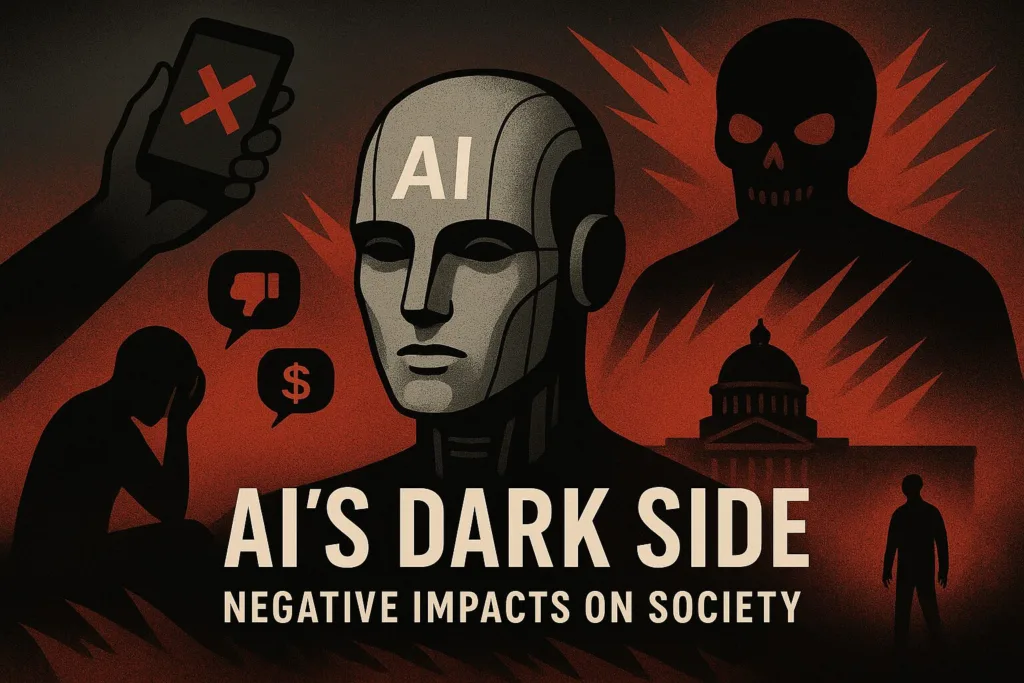
Artificial intelligence dazzles with its promise of progress. But as a tech insider who’s watched AI unfold, I know it harbors serious risks for society. From eroding jobs to fueling inequality, these downsides hit hard. If you’re seeking the truth about AI’s negative impact, this guide delivers it straight. In clear, simple terms, we’ll explore key issues and practical fixes. You’ll gain knowledge that inspires action. Whether you’re a lifelong learner, a busy professional, or an AI enthusiast, these insights empower you. Let’s confront the challenges and chart a wiser path forward.
Job Loss and Economic Shifts
AI changes jobs fast. It automates tasks. For example, robots handle factory work. This displaces workers. Reports show AI could replace two million manufacturing jobs by 2025. Many feel scared about the future.
Also, inequality grows. High-skill jobs rise. But low-skill ones vanish. This widens the gap between rich and poor. Small businesses struggle too. They can’t afford AI tools.
However, you can adapt. Learn new skills. Like coding or data work. This turns fear into opportunity. Stay motivated. Upskill now to thrive.
Privacy and Security Risks
AI collects tons of data. It tracks your online moves. For instance, apps watch your habits. This erodes privacy. Hackers use AI for smarter attacks. They steal identities easier.
Moreover, governments use AI for surveillance. Cameras spot faces in crowds. This raises freedom concerns. Data leaks happen often. Companies mishandle info.
But don’t panic. Protect yourself. Use strong passwords. Check privacy settings. Learn about data rights. These steps empower you. They inspire careful tech use.
Bias and Discrimination
AI learns from data. But data can be unfair. For example, hiring tools favor certain groups. This boosts discrimination. Women or minorities lose out.
Additionally, AI in police work shows bias. It targets some communities more. This harms trust in society. Inequality deepens. Poor areas suffer most.
Yet, change is possible. Push for fair AI. Support diverse teams in tech. Question biased systems. This motivates you to fight for justice. Your voice matters.
Spread of Misinformation
AI creates fake content. It makes deepfakes. These are videos that look real but aren’t. For instance, false news spreads fast. This confuses people.
Plus, chatbots share wrong info. They amplify lies. Elections suffer. Voters get misled. Society divides more.
However, you can fight back. Check facts. Use trusted sources. Teach others media skills. This inspires truth-seeking. Build a smarter world together.
Environmental Costs
AI needs huge energy. Data centers run non-stop. They use lots of water too. For example, training models drains resources. This hurts the planet. Climate change worsens.
Also, e-waste grows. Old AI hardware piles up. Mining for parts harms lands. Green issues rise.
But hope exists. Choose eco-friendly AI. Support green tech firms. Reduce your digital footprint. These actions motivate sustainability. Protect Earth for tomorrow.
Effects on Human Skills and Mental Health
AI does thinking for us. It weakens skills. For example, people lose deep focus. Empathy drops too. Experts warn AI makes us worse humans. We rely on machines too much.
Moreover, social media AI boosts addiction. It shows endless content. Loneliness grows. Mental health suffers. Kids face screen overload.
Still, balance is key. Limit AI use. Practice real talks. Exercise your mind. This inspires growth. Reclaim your human strengths.
Ethical Dilemmas and Loss of Purpose
AI raises tough questions. Who controls it? For instance, weapons use AI. This scares many. Ethics lag behind tech.
Additionally, AI alters purpose. Jobs feel meaningless. Creativity seems lost. People question life’s value. Society feels empty.
But ethics can guide us. Demand clear rules. Join AI discussions. Explore meaningful work. This motivates positive change. Shape AI for good.
How to Respond and Stay Inspired
AI’s negatives seem big. But you hold power. First, educate yourself. Learn AI basics. This builds confidence.
Next, advocate for better. Support laws on AI. Vote for fair policies. Join groups fighting harms.
Also, innovate responsibly. Create helpful AI. Focus on human needs. For more improvement, explore resources at skilldevelopment.info.
Finally, stay hopeful. AI can solve problems too. Use it wisely. Join programs like AI Mastery Plan at aimasteryplan.com. Your actions inspire others. Together, we navigate AI’s challenges.
FAQs
- What is AI’s biggest negative impact?
Job loss tops the list. It displaces workers in many fields. - How does AI hurt privacy?
It collects data without consent. This leads to leaks and tracking. - Can AI cause bias?
Yes. Bad data makes unfair decisions in hiring or policing. - Does AI spread fake news?
Absolutely. It creates deepfakes and wrong info fast. - What about AI’s environmental harm?
It uses huge energy and water. This adds to climate issues. - How does AI affect mental health?
It boosts addiction and reduces deep thinking skills. - Are there ethical issues with AI?
Yes. Like control over weapons and loss of purpose. - How can I help fix AI problems?
Learn skills. Advocate for rules. Use AI responsibly.