
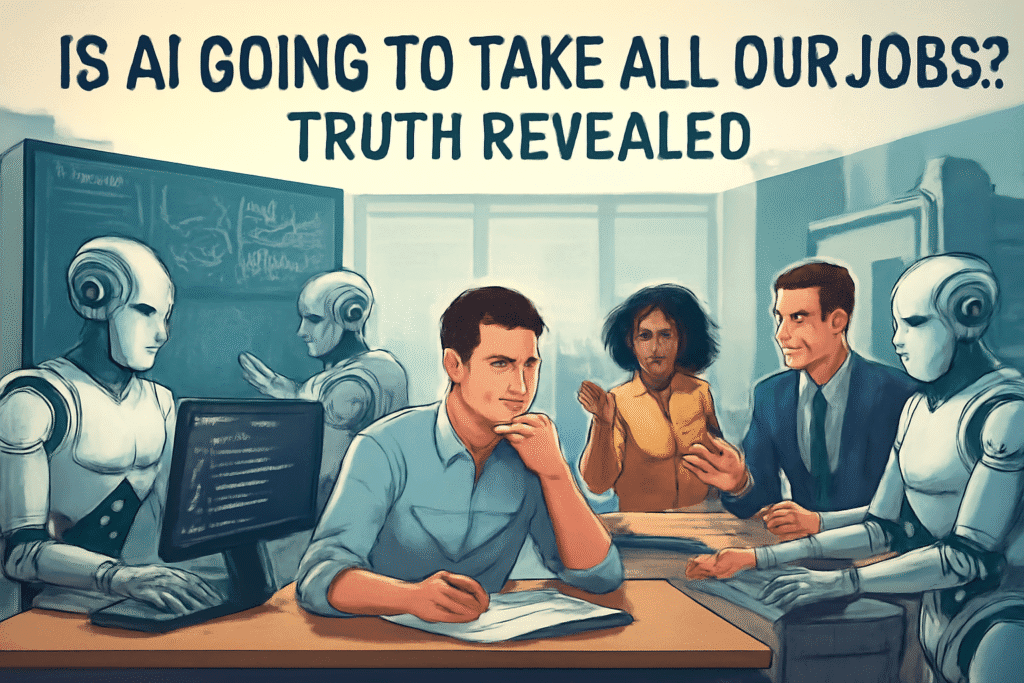
Does AI make you worry about losing your job? Many fear robots will replace everyone. Movies like Terminator fuel this panic. But is it true? In 2025, AI changes how we work, not if we work. This article reveals the truth about AI and jobs. You’ll get facts, examples, and practical tips. Whether you’re a worker, business owner, or curious learner, you’ll see AI’s real impact. Let’s clear up the myths.
The Fear of AI Job Takeover
The idea that AI will steal all jobs is widespread. Headlines warn about automation. Social media shows robots doing human tasks. It’s easy to feel scared.
But history offers perspective. New technology always sparks fear. During the Industrial Revolution, machines replaced weavers. Yet, new jobs like factory roles appeared. AI works the same way. It automates repetitive tasks, like data entry. This lets humans focus on creative work.
In 2025, AI reshapes jobs. It doesn’t eliminate them. The truth is, AI transforms work for the better.
How AI Creates New Opportunities
AI doesn’t just take jobs. It creates them. In 2025, the global AI market reaches $826 billion. This growth drives new roles.
For example, AI needs people to train it. Roles like AI ethicists ensure fairness. Data scientists analyze AI results. Even small businesses hire AI experts. In healthcare, AI reads scans. This lets doctors spend more time with patients. In retail, AI predicts inventory needs. Workers shift to customer-focused roles.
Studies predict AI will create 12 million net new jobs by 2030. That’s more jobs than it replaces. Tip: Explore AI fields. Roles in machine learning or robotics are in demand.
AI opens doors. You just need to adapt.
Jobs AI Is Changing, Not Replacing
Not all jobs are affected equally. AI targets routine tasks. Think cashiers or basic accounting. These may shrink over time.
But many jobs evolve with AI. Writers use AI for drafts. Marketers analyze trends with AI tools. In 2025, 65% of companies use AI to boost productivity, not cut workers.
Look at Amazon. Its warehouses use robots. But humans oversee them. Jobs shift to tech maintenance or planning.
Tip: Find repetitive parts of your job. Use AI to handle those. Focus on skills like creativity or problem-solving. This keeps you valuable.
AI changes tasks. It doesn’t mean unemployment.
The Skills You Need to Thrive
Worried about your job? Don’t be. Upskilling is key. AI rewards those who learn.
In 2025, AI skills are in demand. Basic coding, like Python, is a great start. Understanding data is useful, too. Non-tech skills matter as well. Creativity and emotional intelligence are areas AI can’t touch.
For example, teachers use AI for grading. But inspiring students? That’s human. Leaders need judgment AI lacks.
Tip: Try free online courses. Many platforms teach AI basics. Experiment with tools like Copilot. Stay curious. Lifelong learning keeps you ahead.
Skills protect your career. AI can’t replace a growth mindset.
The Role of Businesses in AI Transition
Businesses shape how AI affects jobs. Smart companies train workers, not fire them.
In 2025, firms like Google offer AI training. They provide workshops for staff. Small businesses use affordable AI tools. This improves efficiency without layoffs.
Challenges exist, though. Some companies cut costs with AI. This can lead to job losses if poorly managed. Workers need support during changes.
Tip for employers: Invest in training. Be clear about AI’s role. This reduces fear. For workers, ask for upskilling programs. It shows you’re proactive.
Businesses and workers can make AI work for everyone.
The Ethical Side of AI in Jobs
AI isn’t just about tech. It’s about people. Ethics are crucial. Unfair AI use can erode trust.
In 2025, ethical AI grows. Companies share how AI affects jobs. Regulations push for fairness. For example, AI hiring tools face checks. Bias in algorithms can harm diversity. Fixing this creates better workplaces.
Tip: Support ethical AI. Workers, ask about AI policies. Businesses, audit AI systems regularly. This builds trust.
Ethics ensure AI helps everyone. Not just profits.
Looking Ahead: AI and the Future of Work
AI keeps growing. By 2030, 30% of jobs may involve AI. But humans stay essential. Creativity, empathy, and strategy are irreplaceable.
Future trends show AI and humans teaming up. Think doctors with AI diagnostics or artists using AI tools. Work becomes collaborative.
Tip: Keep up with AI trends. Try new tools. Join communities like the AI Mastery Plan. For more improvement, explore new skills.
AI isn’t the enemy. It’s a partner for a brighter work future.
FAQs
- Will AI take all jobs?
No. AI automates tasks but creates new roles. It boosts productivity and opportunities. - Which jobs are safe from AI?
Creative and human-focused roles like teaching or leadership resist AI replacement. - How can I prepare for AI changes?
Learn AI basics and soft skills. Take courses and stay adaptable. - Does AI create new jobs?
Yes. AI fuels roles like data scientists and ethicists. Millions are expected by 2030. - How do businesses use AI ethically?
They train staff and ensure fair AI systems. Transparency builds trust.