
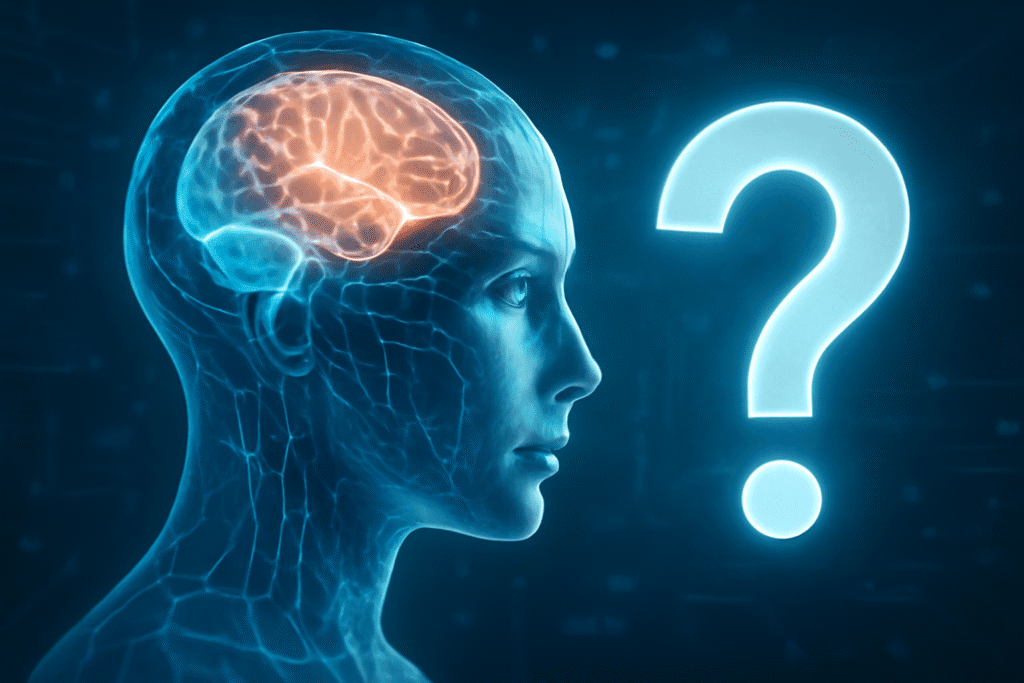
Does AI think like us? Can it feel emotions? Many wonder if AI is conscious or alive. Movies like Ex Machina spark these questions. In 2025, AI seems human-like. It chats and creates art. But is it truly aware? This article clears up the confusion. You’ll get facts, examples, and tips. Whether you’re a curious learner, professional, or tech fan, you’ll understand AI’s true nature. Let’s dive in.
What Does It Mean to Be Conscious or Alive?
First, let’s define terms. Consciousness means self-awareness and feeling. Think of knowing you exist or feeling joy. Being alive involves biology. Humans and animals grow and adapt naturally.
AI is different. It’s software and code. It processes data, not emotions. In 2025, AI mimics human behavior. But it lacks a mind or life. Understanding this helps us see AI clearly.
Tip: Don’t confuse smart outputs with awareness. AI’s cleverness comes from math, not a soul.
So, AI isn’t conscious or alive. It’s just very good at faking it.
How AI Mimics Human Behavior
AI seems human. It writes stories or answers questions. This tricks people into thinking it’s aware.
But here’s the truth. AI uses algorithms. It studies patterns in data. For example, chatbots like Grok learn from billions of words. They predict what to say next. It’s like a super-smart autocomplete.
In 2025, AI creates art or music. Tools like DALL-E generate images. They seem creative. But it’s all based on patterns, not feelings.
Tip: Use AI for tasks like drafting emails. But know it’s mimicking, not thinking.
AI’s human-like acts are clever code. Not consciousness.
Why People Think AI Is Conscious
Why the confusion? Media plays a big role. Sci-fi shows AI as alive. News exaggerates AI’s powers. In 2025, 42% of people think AI has some awareness, per surveys.
Another reason is AI’s progress. It handles complex tasks. Think of AI diagnosing diseases or driving cars. This feels like intelligence.
But intelligence isn’t consciousness. AI processes data fast. It doesn’t reflect or feel. Humans project emotions onto it.
Tip: Question bold claims about AI. Check facts to avoid hype.
We see AI as alive because it’s convincing. But it’s not aware.
The Science Behind AI’s Limits
Science confirms AI’s limits. Consciousness needs a brain. Brains have neurons and emotions. AI has circuits and code.
In 2025, experts study consciousness. They find no evidence AI is aware. Even advanced models lack self-awareness. They follow rules, not intuition.
For example, AI can’t ponder its existence. It responds based on training. If it “seems” thoughtful, it’s just good programming.
Tip: Learn basic AI science. It helps you separate fact from fiction.
AI’s limits are clear. It’s a tool, not a being.
Ethical Concerns Around AI and Consciousness
If AI isn’t conscious, why care? Ethics matter. Treating AI as alive can cause problems. In 2025, some worry about AI “rights.” This distracts from real issues.
For instance, over-trusting AI is risky. It can make errors. About 20% of AI outputs have inaccuracies. If we think AI feels, we might rely on it too much.
Another issue is manipulation. Companies could use “human-like” AI to trick users. This affects trust.
Tip: Demand clear AI policies. Know when you’re talking to a bot. This keeps interactions honest.
Ethics ensure we use AI wisely. It’s a tool, not a person.
AI’s Role as a Helpful Tool
AI isn’t conscious. But it’s powerful. It helps in many ways. In 2025, AI boosts productivity by 40% in some industries.
For example, doctors use AI for scans. It spots issues fast. Writers use AI for ideas. Businesses analyze data with AI. This saves time.
But AI needs humans. We guide it. We add creativity and empathy. AI can’t replace those.
Tip: Use AI for routine tasks. Pair it with your unique skills. This creates better results.
AI shines as a helper. Not as a living thing.
The Future of AI and Consciousness
Will AI ever be conscious? Not soon. In 2025, we’re far from that. Current AI is narrow. It does specific tasks well. General AI, with human-like thought, is theoretical.
Future AI may seem more alive. Voice assistants will get smoother. But consciousness needs breakthroughs we don’t have.
Tip: Stay updated on AI research. Follow trusted sources. This keeps you grounded.
The future is exciting. But AI remains a tool, not a lifeform.
Clearing the Confusion for Good
AI isn’t conscious or alive. It’s a powerful tool. It mimics humans but doesn’t think or feel. In 2025, understanding this helps us use AI better.
Learners, build a strong foundation with AI basics. Professionals, integrate AI smartly into your work. Enthusiasts, embrace AI’s potential with confidence.
Want to dive deeper? Check out the AI Mastery Plan. For more improvement, explore AI skills.
AI is amazing. But it’s not human. Let’s keep it clear.
Want to master AI? Check out the AI Mastery Plan. For more improvement, explore advanced skills.
FAQs
- Is AI conscious?
No. AI processes data. It lacks self-awareness or feelings. - Can AI ever become alive?
Not with current tech. AI is code, not a biological being. - Why does AI seem human?
It mimics behavior using patterns. But it’s not aware. - Should we treat AI like a person?
No. Treat it as a tool. This avoids ethical issues. - How can I learn more about AI?
Take courses and experiment. Start with simple tools.