
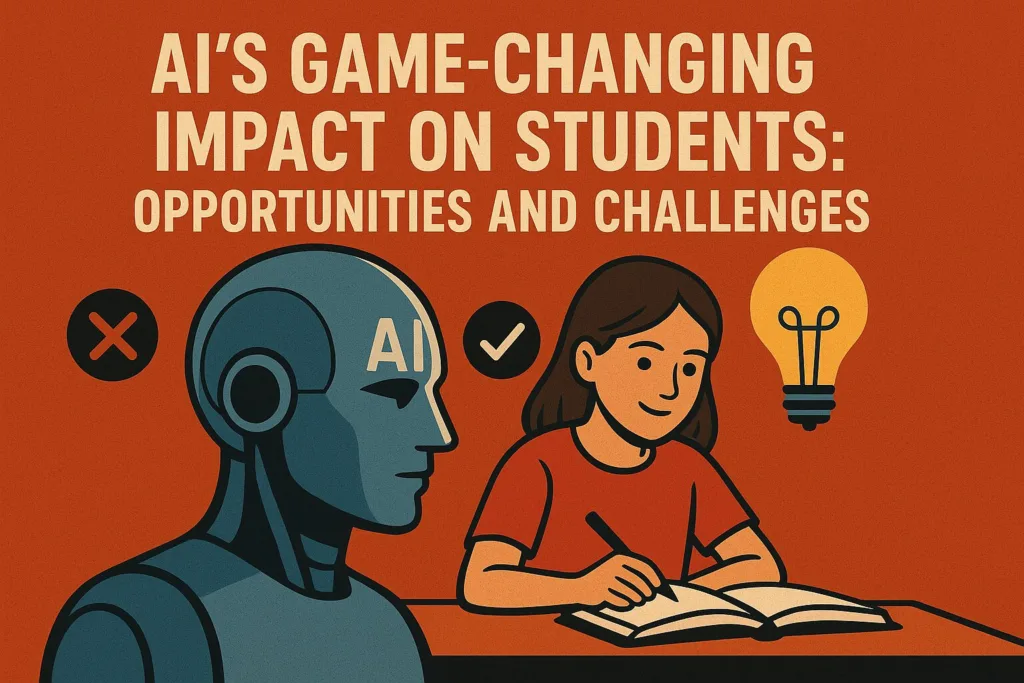
As a seasoned writer who’s seen tech reshape lives, I’m excited to share how artificial intelligence (AI) is revolutionizing education for students. Imagine tools that make studying easier, personalized, and fun. AI is doing just that, from tailoring lessons to preparing you for future careers. If you’re wondering about AI’s impact on students, this guide explains it clearly. You’ll find practical tips, real-world examples, and inspiration to embrace AI’s potential. Whether you’re a student, parent, or educator, this article will motivate you to navigate AI’s benefits and challenges with confidence. Let’s dive into this game-changer for learning.
Personalizing Education for Every Student
AI makes learning unique for you. It adjusts to how you learn best. For example, apps like Duolingo change lessons based on your speed. This keeps you engaged. In 2025, AI tutors offer instant help. They explain tough topics clearly.
Plus, AI suggests study tools. It finds videos or quizzes that fit your style. Students with special needs, like dyslexia, benefit too. Tools like text-to-speech make reading easier.
Personalized learning builds your confidence. It inspires you to love studying. Try an AI app to see how it fits your needs.
Saving Time and Boosting Efficiency
AI helps you study smarter. It handles boring tasks. For instance, AI tools summarize long articles. They save you hours. Apps like Grammarly fix your essays fast. This lets you focus on big ideas.
Also, AI organizes your day. It plans study time and reminds you of deadlines. For group projects, AI tools like shared docs make teamwork smooth.
Efficiency gives you more free time. That’s motivating. Use AI to balance school and fun. Start with a free study app today.
Opening Doors to Education Everywhere
AI makes learning accessible. It brings classes to remote places. For example, platforms like Khan Academy offer free courses online. Anyone with internet can join. AI translates lessons into many languages. This helps non-English speakers.
Moreover, AI supports students with disabilities. Speech-to-text tools help with writing. Visual aids assist those with hearing challenges. In 2025, AI powers virtual classrooms with real-time captions.
Access sparks hope. It shows learning is for all. Explore online courses to expand your knowledge.
Preparing for Future Careers
AI gets you ready for tomorrow’s jobs. It teaches skills employers need. For instance, coding apps use AI to guide you. You learn Python easily. Data tools show you how to analyze trends. These skills shine in 2025.
Also, AI introduces new fields. Like AI ethics or robotics. Career quizzes match your passions to jobs. This helps you plan early.
Learning AI skills feels empowering. It motivates you to dream big. Try a free coding tool to start your career path.
Distractions and Overuse Risks
AI has downsides too. It can distract you. For example, AI-powered social media apps pull you in. You lose study time scrolling. Grades may suffer.
Additionally, overusing AI weakens skills. Relying on AI for answers skips critical thinking. Your creativity fades. You might lose your unique voice in writing.
Balance is key. Use AI as a helper, not a crutch. Set phone-free study hours. This inspires discipline. Keep your skills sharp.
Unequal Access and Fairness Issues
Not everyone gets AI’s benefits. Advanced tools cost money. Some schools can’t afford them. This creates gaps. Wealthy schools get better tech. Others fall behind.
Also, AI can be unfair. It learns from data. But data may favor some groups. For example, AI tutors might not understand certain accents. This frustrates students.
You can make a difference. Advocate for equal tech access. Push for fair AI systems. This motivates you to create change.
Privacy and Data Concerns
AI collects student data. It tracks your progress. But this raises risks. For instance, data leaks expose personal info. In 2025, schools work hard to protect data.
Moreover, companies might misuse data. They could share it without permission. This worries parents and students.
Protect yourself. Check app privacy settings. Use secure platforms. Learning about data safety inspires confidence. Take control of your info.
How Students Can Use AI Wisely
You can harness AI’s power. First, choose good tools. Apps like Quizlet make studying fun. They’re free and simple.
Next, set limits. Don’t let AI do all the work. Practice solving problems yourself. Also, stay safe. Pick apps with strong privacy rules.
Join online groups. Reddit’s education forums share AI tips. Network with others. For more improvement, explore resources at skilldevelopment.info.
Finally, experiment. Build a small AI project. Like a study bot. Join programs like AI Mastery Plan at aimasteryplan.com. These steps inspire you to grow.
The Future of AI in Education
AI’s role in learning is expanding. In 2025, virtual reality classrooms feel real. AI predicts your weak spots. It offers help before you struggle.
Also, AI blends with other subjects. Like science for experiments. Or art for creative projects. These trends excite.
Get ready now. Learn AI basics. Stay fair and ethical. Your skills will shape education’s future. This motivates you to act today.
Stay Motivated and Take Charge
AI is transforming student life. It brings amazing tools and some risks. Don’t fear the challenges. See them as chances to grow. Start small. Try an AI study app now.
Build skills for the future. Stay mindful of privacy and fairness. Your choices matter. You can make AI work for good. Let its impact inspire you to learn, create, and lead.
FAQs
- How does AI help students learn?
It tailors lessons and saves time with tools like summaries. - What’s a key benefit of AI for students?
It makes education open to everyone, anywhere. - Can AI harm learning?
Yes. Overuse hurts thinking and creativity skills. - How does AI affect student data?
It collects info. Leaks risk privacy. - Does AI create unfairness?
Sometimes. Biased tools may favor some students. - How can students use AI well?
Choose good tools. Set limits. Stay safe. - What job skills does AI teach?
Coding and data skills prepare you for careers. - How do I start with AI?
Try free apps. Join groups. Stay curious.