
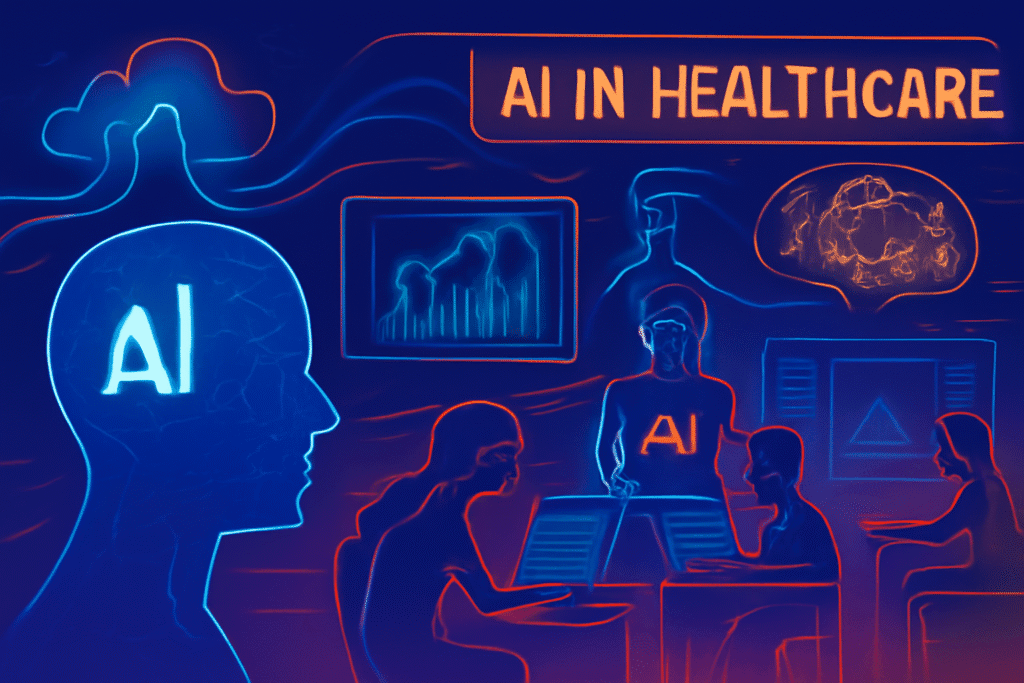
How AI is Changing Healthcare
Imagine a doctor catching a disease early or a robot helping in surgery. That’s AI changing healthcare today, August 07, 2025. As a tech enthusiast and blogger, I love showing how this innovation saves lives. Let’s explore the details step by step!
What is AI Doing in Healthcare?
AI changing healthcare uses smart tech to improve medical care. It analyzes data to diagnose issues, predict risks, or assist doctors with precision.
Think of a trusty sidekick. AI plays that role, supporting tasks from reading scans to chatting with patients. It’s transforming medicine!
Want more insights? Check AI guides at AI Mastery Plan.
A Journey Through Time
AI in healthcare began with simple tools in the 2000s. By 2025, it’s a vital part of hospitals, offering advanced diagnostics and care. Growth keeps accelerating.
How AI Works in Medicine
Here’s how it makes an impact:
- Early Diagnosis: Detects diseases like cancer in scans quickly.
- Personalized Plans: Creates treatments tailored to each patient.
- Robotic Assistance: Guides surgeons with steady hands.
- Data Review: Studies records to foresee health problems.
See real uses with case studies at SupportClaim.info.
Real-Life Examples in 2025
Let’s see AI changing healthcare in action:
- Cancer Screening: AI spots tumors in mammograms faster than experts.
- Virtual Support: Chatbots answer patient questions anytime.
- Drug Development: AI finds new medicines in record time.
- Wearable Tech: Smartwatches track heart rates with AI.
- Surgical Precision: Robots like da Vinci assist in operations.
Explore more with real-world examples at SupportClaim.info.
Benefits for Patients and Doctors
This tech offers amazing perks:
- Speedy Care: Diagnoses happen fast, saving critical time.
- Higher Accuracy: Cuts down on mistakes in medical readings.
- Wider Access: Brings help to remote villages via tech.
- Reduced Workload: Doctors focus on patients, not papers.
Challenges to Tackle
AI has hurdles. It relies on top-notch data and can cost a lot.
Picture a car needing fuel. Without good data, AI stalls. Hospitals must plan smartly.
Deep Dive into Tools
Let’s look at key tools:
- IBM Watson: Analyzes medical data for insights.
- Zebra Medical: Finds diseases in imaging scans.
- Ada Health: Checks symptoms for patients online.
- Surgical Robots: Aids complex surgeries with ease.
Find tutorials at AI Mastery Plan.
Stories from the Field
In 2025, a hospital in Texas used AI to predict patient admissions. Another in India employed it to manage rural health checks. These successes show real progress.
The Future Ahead
By 2025, AI might predict diseases before symptoms show. Imagine a check-up that warns you early.
It’s like a health guardian. AI could make medicine proactive, not just reactive.
How It’s Helping Globally
In Africa, AI powers mobile clinics with diagnostic apps. In Europe, it streamlines hospital workflows. This global reach proves its value.
Tips for Patients
Patients can use AI apps to track health or ask questions. Wearables offer daily insights. Stay informed and talk to doctors about these tools.
Expert Opinions
Doctors say AI saves hours on routine tasks. Researchers predict it will cut diagnosis times by 30% in five years. The buzz is growing!
FAQs About AI in Healthcare
Got questions? Here are answers.
What’s the easiest way to see AI changing healthcare?
It’s tech that helps doctors treat and diagnose better.
How does AI aid diagnoses?
It spots issues in scans fast. See AI guides at AI Mastery Plan.
Can AI replace doctors?
No, it assists by handling basic tasks.
What tools use AI in hospitals?
IBM Watson and Zebra Medical help daily. Check case studies at SupportClaim.info.
Does AI need special data?
Yes, quality data ensures accurate results.
How does AI reach remote areas?
It offers virtual care and monitoring tools.
Is AI safe for privacy?
Yes, with strict laws, it protects patient data.
What’s next for AI in health?
Predicting diseases early is a big goal.
Closing Thoughts
AI changing healthcare is reshaping medicine, from early detection to robotic surgery. It’s more than tech—it’s a lifeline for better health in 2025. Share your thoughts or learn more with resources at AI Mastery Plan!