
Curious about where AI is headed by 2030? You’re in the right place. Artificial intelligence is reshaping our world at lightning speed. From smarter assistants to life-changing innovations, AI promises a future that’s both exciting and complex. This article dives into what you can expect. It’s packed with practical insights and tips to prepare. Whether you’re a lifelong learner, a professional, or just an AI enthusiast, let’s explore the future together.
Why AI’s Future Matters
AI is no longer sci-fi. It’s here, powering tools like virtual assistants and medical diagnostics. By 2030, AI could add up to $15 trillion to the global economy, according to studies. That’s huge. It drives efficiency in industries like health care, transport, and education. But it’s not just about money. AI tackles big problems, like climate change or disease prediction. It also raises questions about ethics and jobs. Understanding its path helps you stay ahead. Let’s start with the tech.
Breakthroughs in AI Technology
AI is getting smarter. By 2030, expect major leaps. Multimodal AI will shine. These systems handle text, images, audio, and even video at once. Imagine an AI that sees a photo, describes it, and answers questions about it. That’s coming.
Neural networks will improve. They’ll reason better, making fewer mistakes. Quantum computing could supercharge AI. It solves complex problems faster than today’s computers. For example, drug discovery might take days, not years.
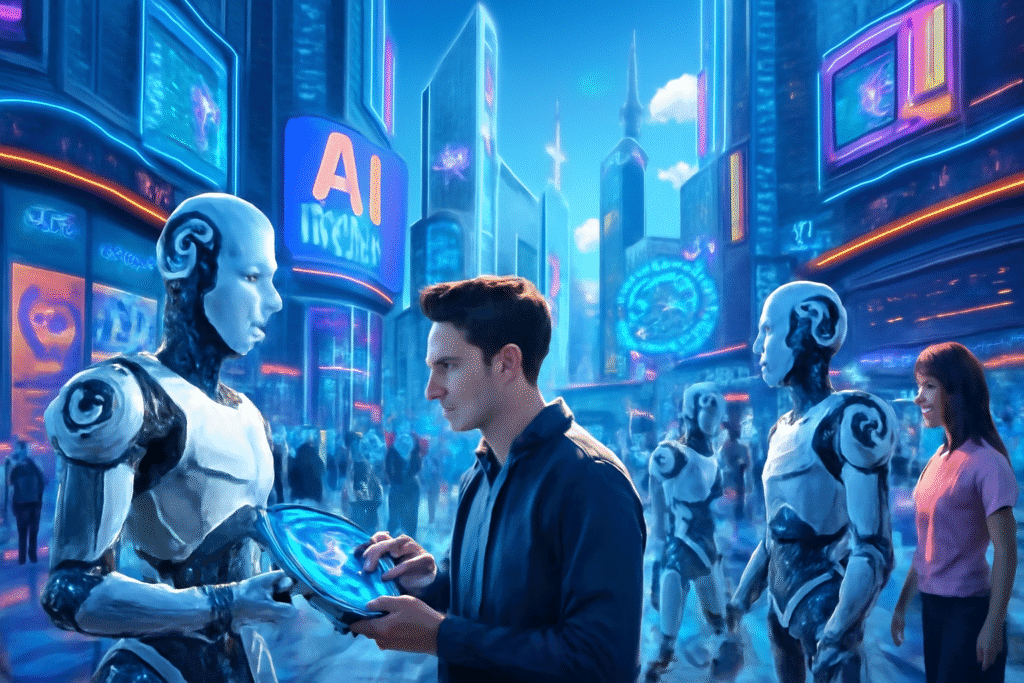
Autonomous agents will grow. These AIs act on their own. They’ll book your flights or manage your calendar with little input. Robotics will advance too. Humanoid robots could assist in homes or factories. They’ll be safer and more adaptable.
Will we see Artificial General Intelligence (AGI)? That’s AI as smart as humans across tasks. Some experts think it’s possible by 2030. Others say it’s farther off. Either way, these advancements will redefine tech. Next, let’s see how they change daily life.
AI in Everyday Life
By 2030, AI will blend into your routine. Personal assistants will know you better. They’ll suggest meals based on your diet or remind you to exercise. Smart homes will learn your habits. Lights dim when you sleep. Thermostats save energy automatically.
Transportation will transform. Self-driving cars will dominate. They’ll cut accidents by 90%, experts predict. Public transport will optimize routes in real-time. Travel becomes faster and safer.
Education will personalize. AI tutors adjust lessons to your pace. Struggling with math? They’ll explain it differently. Entertainment will adapt too. Streaming services will create shows tailored to your tastes. Imagine a movie that shifts its plot based on your reactions.
Health care will improve. AI will predict illnesses early. Wearables will monitor your vitals and alert doctors. These changes make life smoother. But privacy will be key. You’ll need to protect your data. Let’s talk about work next.
Economy and Job Market
AI will boost economies. It streamlines businesses. For instance, retailers use AI to predict demand. Factories cut waste with smart systems. By 2030, AI could raise global GDP by 14%, per some forecasts. That’s massive growth.
But jobs will shift. Routine tasks like data entry may vanish. Roles in AI development, ethics, or oversight will boom. Humans will work alongside AI. For example, doctors will use AI diagnostics but make final calls. Creatives will use AI tools to design faster.
New fields will emerge. Think AI-driven green tech or space exploration. To thrive, upskill now. Learn Python or data analysis. Focus on human skills like empathy or strategy. These resist automation. The job market will reward adaptability.
Ethical Challenges Ahead
AI isn’t perfect. Bias is a big issue. If trained on bad data, AI can discriminate. For example, hiring tools once favored men because of biased resumes. Fixing this needs diverse teams and clean data.
Energy use is another concern. Training AI models takes huge power. By 2030, greener solutions will help. AI itself can optimize energy grids or reduce emissions. It’s a double-edged sword.
Ethics will guide progress. Governments will set rules. Expect laws on AI transparency. Misinformation will be a fight. AI can spread fake news but also detect it. Safety first. Job displacement needs planning. Training programs can ease transitions.
Public trust matters. People fear AI if it feels opaque. Clear communication builds confidence. Ethical AI will shape a better 2030.
Global Impact and Society
AI will bridge gaps. In developing nations, it can improve access. Think AI doctors in remote villages. Or apps teaching kids in local languages. It democratizes knowledge.
But inequality is a risk. Wealthy nations might pull ahead. Ensuring access for all is vital. AI can also fight climate change. It predicts weather patterns or optimizes solar farms. By 2030, it could cut global emissions by 4-10%, per estimates.
Social dynamics will shift. AI might deepen screen time or isolation. Yet, it can foster connection. Virtual communities will grow. People will collaborate globally on AI projects. Society will balance tech and humanity.
How to Prepare for 2030
You can get ready now. Start learning AI basics. Free courses abound online. Our AI Mastery Plan offers clear steps to build skills. It’s perfect for beginners or pros.
Focus on human strengths. Creativity, critical thinking, and empathy stand out. AI can’t match these yet. Practice problem-solving. Stay curious about trends.
Join communities. Reddit’s r/MachineLearning or AI-focused Discord groups share tips. Networking opens doors. For more improvement, explore Skill Development for resources.
Build a portfolio. Code small projects. Share them on GitHub. Track AI news, but focus on timeless skills. Math and coding basics last forever. Start small, stay consistent.
Frequently Asked Questions
- Will AI replace humans by 2030?
No. It’ll change jobs, not eliminate them. Human skills like creativity stay vital. - What is multimodal AI?
AI that handles text, images, and more. It’s versatile and user-friendly. - How will AI affect health care?
It’ll predict diseases and personalize care. Expect faster, accurate diagnoses. - Is AGI coming by 2030?
Maybe. Some predict it. Others say later. Narrow AI will dominate either way. - How can I learn AI now?
Take free courses. Use Kaggle or Coursera. Start with Python basics. - Will AI harm the environment?
It uses energy but also saves it. AI optimizes renewables and cuts waste. - How do I protect my data?
Use strong passwords. Check privacy settings. Support clear AI regulations.
Conclusion
The future of AI in 2030 is bright and bold. Expect smarter tech, better lives, and new opportunities. Challenges like ethics and jobs need care. But you can prepare. Learn, adapt, and stay curious. AI will shape a world where humans and tech thrive together. Jump in now. The journey’s just starting.