
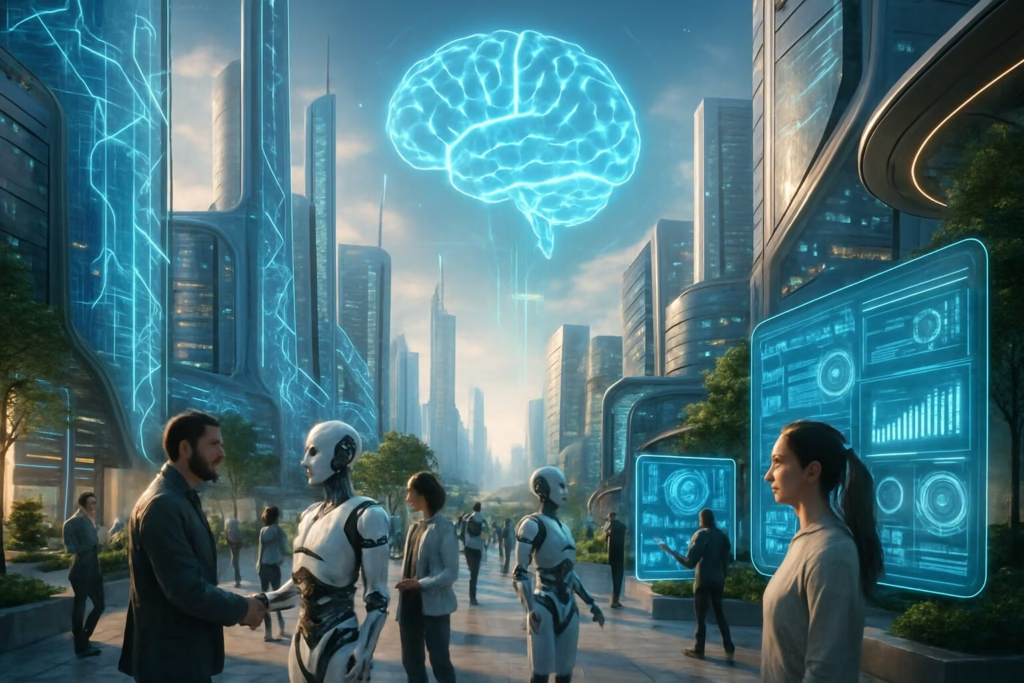
Artificial intelligence (AI) is changing our world fast. It powers smart assistants like Siri and drives self-driving cars. But what does AI mean for humanity’s future? This article explores how AI shapes jobs, ethics, and daily life. We will look at benefits, risks, and ways to prepare. Whether you are a student, professional, or curious learner, these insights will help you understand AI’s role. Let’s dive in.
What Is Artificial Intelligence?
AI mimics human thinking. It learns from data and makes decisions. Think of it as a smart computer brain. Simple AI handles tasks like sorting emails. Advanced AI, like machine learning, improves over time.
AI started in the 1950s. Now, it is everywhere. From Netflix recommendations to medical diagnoses, AI boosts efficiency. Yet, it is not magic. It relies on algorithms and big data. Understanding this basics helps us see its potential.
Transitioning to impacts, AI affects society in big ways.
How AI Transforms Jobs and Work
AI automates routine tasks. For example, robots assemble cars in factories. This boosts productivity. But it also displaces jobs. Truck drivers might face changes with autonomous vehicles.
However, AI creates new roles too. Data scientists and AI ethicists are in demand. To stay ahead, learn skills like coding or critical thinking. Upskill through online courses. For instance, focus on human-AI collaboration. This way, you thrive in an AI world.
Moreover, AI enhances creativity. Tools like AI art generators help designers brainstorm. Professionals can use AI to solve problems faster. The key is adaptation. Embrace AI as a tool, not a threat.
Ethical Challenges in AI Development
AI raises tough questions. Bias in algorithms is a big issue. If data is flawed, AI makes unfair decisions. For example, facial recognition sometimes fails on diverse faces.
Privacy matters too. AI collects vast data. Who controls it? Governments push for regulations like GDPR in Europe. We need ethical guidelines. Developers should prioritize fairness and transparency.
Additionally, AI in weapons scares many. Autonomous drones could change warfare. Society must discuss limits. By staying informed, we shape AI for good.
AI’s Role in Healthcare and Education
In healthcare, AI spots diseases early. Algorithms analyze scans better than humans sometimes. This saves lives. During pandemics, AI predicts outbreaks.
Education benefits too. Personalized learning apps adapt to students. Struggling kids get extra help. Teachers focus on mentoring. This makes learning fun and effective.
But access is key. Not everyone has tech. Bridge the gap with affordable tools. AI can democratize knowledge if used right.
Shifting focus, let’s explore daily life changes.
Daily Life in an AI-Driven World
Smart homes use AI for lighting and security. Voice assistants plan your day. This saves time.
Socially, AI connects us. Translation apps break language barriers. Yet, deepfakes spread misinformation. Learn to spot fakes. Critical thinking is vital.
In entertainment, AI curates playlists. It even writes stories. But human touch remains unique. Balance tech with real experiences.
Now, consider long-term futures.
The Long-Term Future: Opportunities and Risks
AI could solve climate change. It optimizes energy use. Or enhance space exploration with smart robots.
Risks include superintelligence. If AI surpasses humans, what happens? Experts like those in AI Mastery Plan stress safety research. We must align AI with human values.
Optimistically, AI augments humanity. It frees us for creativity and relationships. Prepare by building resilience. Lifelong learning keeps you relevant.
For more improvement, explore resources on tech skills.
Preparing for an AI Future
Start small. Use AI tools daily. Apps like ChatGPT aid writing.
Educate yourself. Read books or join communities. Professionals: Integrate AI in workflows. Enthusiasts: Experiment with projects.
Policy-wise, vote for smart regulations. Support education in AI ethics.
In summary, AI shapes a bright future if handled well. Stay curious and proactive.
FAQs
- What is AI in simple terms?
AI is tech that thinks and learns like humans but faster. - Will AI take all jobs?
No, it changes jobs. It creates new ones while automating old tasks. - Is AI dangerous?
It can be if misused. Focus on ethics to minimize risks. - How can I learn AI?
Start with free online courses. Practice with simple tools. - Does AI help the environment?
Yes, it optimizes resources and predicts climate patterns. - What is machine learning?
A type of AI that improves from data without explicit programming. - Can AI be creative?
It generates ideas, but true creativity needs human input.