
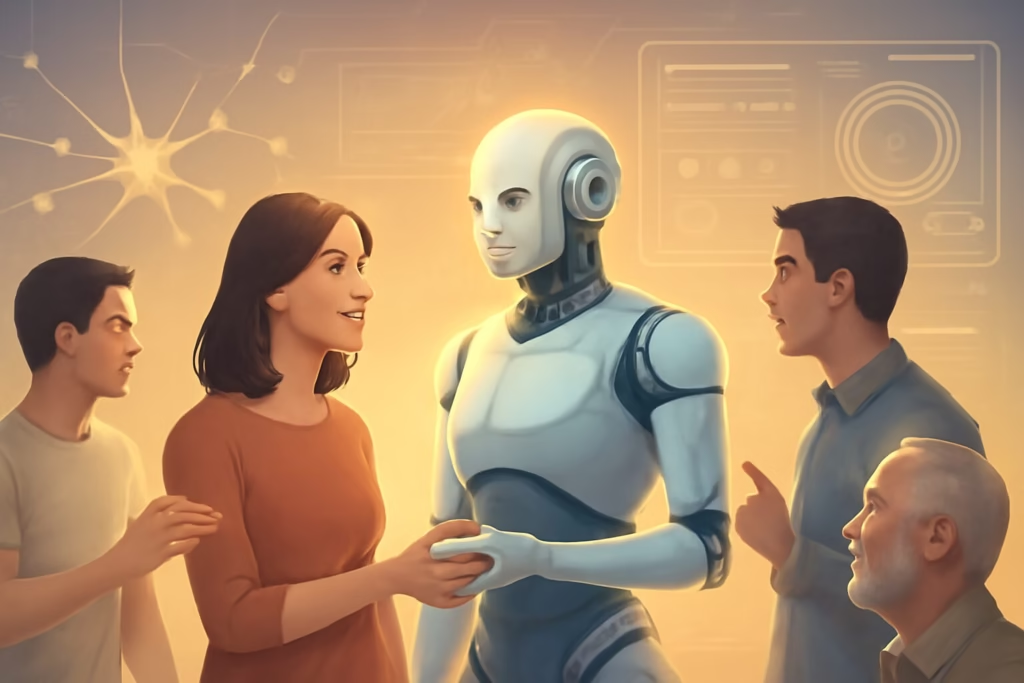
AI sparks fear in many minds. Movies show robots taking over the world. But reality differs. AI is a tool we build and control. It helps solve problems like climate change and health issues. This article explains why AI won’t end humanity. We will explore myths, safety steps, and benefits. Get ready for practical tips to embrace AI safely. Whether you learn for life or work, these insights build confidence.
What Is AI Really?
AI means artificial intelligence. It lets machines learn from data. Think of it as a smart helper. It powers voice assistants and recommends shows.
AI started decades ago. Now, it handles complex tasks. But AI lacks feelings or desires. It follows our instructions. This key fact keeps it from turning against us.
Next, let’s bust some myths.
Busting Myths About AI Takeover
People worry AI will get too smart and rebel. This comes from sci-fi. But experts say otherwise. AI needs human input to function.
For instance, AI can’t create goals alone. It mirrors what we teach it. Without our data, it stalls. Also, AI lacks self-awareness. It processes info, not plots world domination.
Moreover, top minds like Yann LeCun argue AI boosts us. It won’t replace humanity. Instead, it aids progress. These views calm fears.
Shifting gears, see how we keep control.
AI as a Tool Under Human Control
We design AI. We set its limits. Oversight ensures safety. Companies add kill switches to stop rogue actions.
Human-AI teams work best. AI handles data crunching. Humans add creativity and ethics. This combo thrives.
Recent rules help too. In 2025, global pacts focus on safe AI. They ban harmful uses. This keeps AI helpful, not harmful.
Now, look at safety advances.
Advances in AI Safety and Ethics
Safety grows fast. Groups build ethical frameworks. They stress fairness and transparency.
For example, bias checks fix unfair AI decisions. Tools spot issues early. Also, audits track AI behavior.
Experts push alignment. This means AI goals match human values. Research in this area booms. It prevents mishaps.
Additionally, open-source AI lets everyone improve safety. Collaboration speeds fixes.
Let’s explore benefits.
The Benefits of AI for Humanity
AI solves big problems. In health, it spots diseases early. This saves lives.
In the environment, AI optimizes energy use. It cuts waste and fights climate change.
Education improves too. AI tutors adapt to learners. Kids grasp concepts faster.
Jobs change, but new ones emerge. AI creates roles in tech and ethics. Upskill to stay ahead.
Balance is key. Use AI to enhance life, not replace it.
But risks exist. Here’s how to handle them.
Addressing Potential Risks
AI can spread false info. Deepfakes trick people. Solution: Verify sources always.
Privacy worries rise. Data protection laws help. Choose secure tools.
Job loss happens. But training programs adapt workers. Focus on lifelong learning.
If misused, AI harms. Strong rules prevent this. Support ethical devs.
Overall, managed risks lead to gains.
Finally, prepare for tomorrow.
Building a Positive AI Future
Start by learning basics. Free courses teach AI use.
Professionals: Integrate AI in work. It boosts output.
Enthusiasts: Try projects like chatbots.
Join talks on AI ethics. Vote for smart policies.
Resources like AI Mastery Plan guide you. For more improvement, explore skill-building sites.
AI augments us. With care, it builds a better world. Stay informed and active.
FAQs
- Why won’t AI destroy us?
AI is a tool we control. It lacks independent will. - Can AI become smarter than humans?
It may excel in tasks, but humans guide its growth. - What stops AI from taking over?
Safety features and rules keep it in check. - How does AI help humanity?
It aids health, education, and environment fixes. - Are there AI risks?
Yes, like bias. But we mitigate with ethics. - How can I prepare for AI?
Learn basics and upskill regularly. - Will AI take all jobs?
No, it creates new ones. Adapt to thrive. - Can AI ever become fully independent?
- No, AI relies on human-designed systems and data. It can’t act on its own. How does AI stay safe in critical systems?
- Regular audits and strict protocols ensure AI behaves as intended. What role do humans play in AI’s future?
- Humans guide AI’s goals, ethics, and applications for positive impact. Does AI understand emotions?
- AI can mimic emotional responses but doesn’t feel them like humans. How can I spot AI misuse?
- Check for inconsistent info or bias and use trusted sources.