
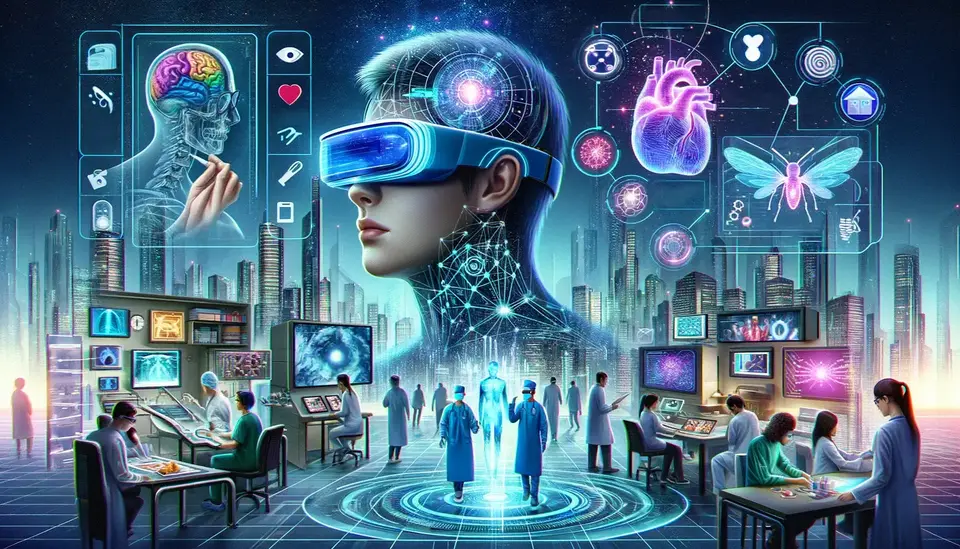
Imagine stepping into a virtual world where AI makes everything feel real. Or overlaying digital info on your real surroundings with smart guidance. That’s AI in VR and AR at work. As a tech fan who loves sharing simple insights, I’m here to break it down. This guide suits learners, pros, and enthusiasts. Let’s explore how AI boosts these technologies in 2025 and beyond.
What Is AI in VR and AR?
AI in VR and AR combines artificial intelligence with virtual and augmented realities. VR creates full digital worlds. AR adds digital elements to the real world. AI makes them smarter.
For example, AI helps VR games adapt to your moves. In AR, it recognizes objects and offers info. This blend opens new doors. It turns basic experiences into personal ones.
AI uses data to learn and improve. So, VR and AR feel natural. Beginners can start with free apps to see this magic.
How AI Enhances VR Experiences
AI powers VR by making worlds dynamic. It analyzes user actions. Then, it adjusts scenes in real time.
Take gaming. AI creates enemies that learn from your style. This keeps play exciting. In training, AI simulates real scenarios. Pilots practice flights without risk.
Professionals use AI-VR for design. Architects walk through virtual buildings. They spot issues early. Enthusiasts enjoy immersive stories. AI tailors plots to choices.
AI also fixes VR issues like motion sickness. It predicts movements and smooths visuals. This makes VR more comfortable for all.
AI’s Role in Augmented Reality
AR overlays digital info on reality. AI makes it accurate and useful.
In navigation, AI-AR shows directions on your phone screen. It identifies landmarks. This helps in cities or hikes.
For shopping, AI-AR lets you try clothes virtually. It scans your body and fits items. This saves time and reduces returns.
In education, AI-AR brings history alive. Scan a book, and AI shows 3D models. Learners see ancient ruins up close.
Pros use AI-AR for repairs. Mechanics see overlays on engines. This speeds up fixes and cuts errors.
Benefits of AI in VR and AR
AI brings key advantages. It makes experiences personal. Users get content that fits their needs.
It saves costs too. Companies test products in VR. They avoid physical prototypes.
Safety improves. Surgeons practice in AI-VR. They hone skills without real patients.
Accessibility grows. AI-AR helps the visually impaired navigate. It describes surroundings aloud.
Enthusiasts gain fun. AI creates endless virtual worlds. Learners build skills fast.
Challenges and How to Overcome Them
AI in VR and AR has hurdles. Privacy concerns arise. AI collects user data.
To fix this, choose apps with strong security. Look for encryption features.
Technical limits exist. AI needs powerful devices. Start with affordable options like phone AR.
Ethical issues matter. AI must avoid bias in simulations. Use diverse data sets.
Professionals can audit tools. Learners stay informed on ethics.
Practical Tools and Tips for 2025
Start with free tools. Google ARCore for Android offers simple AR. Oculus for VR has AI games.
Tip one: Practice daily. Spend 15 minutes in VR. Build comfort gradually.
Tip two: Join communities. Reddit’s r/VR has tips from users.
For pros, Unity with AI plugins builds custom apps. Test ideas quickly.
In 2025, AI-VR hybrids like Meta’s Quest dominate. They blend real and virtual seamlessly.
Enthusiasts can create content. Use AI to generate AR filters on Snapchat.
Learners try free courses. Platforms teach AI-VR basics without cost.
The Future of AI in VR and AR
By 2025, AI will make VR and AR everyday. Expect smarter assistants in AR glasses.
AI will predict user needs. It could adjust VR based on mood.
In medicine, AI-AR will guide surgeries. It overlays vital info in real time.
Gaming will evolve. AI creates infinite worlds on the fly.
This future excites all. Learners prepare now. Pros innovate. Enthusiasts enjoy.
FAQs on AI in VR and AR
- What is AI in VR?
It makes virtual worlds interactive and adaptive. - How does AI improve AR?
It recognizes objects and adds useful info. - Can beginners use AI-VR?
Yes, start with free apps like Pokémon GO. - What tools are best for pros?
Unity and ARCore offer advanced features. - Is AI-VR safe?
Use trusted apps to protect data. - How does AI fix VR sickness?
It smooths movements for better comfort. - What’s next for AI-AR?
Glasses that overlay info in daily life. - How can learners start?
Try free demos and online tutorials.
AI in VR and AR is reshaping how we play, work, and learn. It’s not just tech—it’s a bridge to new worlds. Whether you’re curious or committed, this field offers endless possibilities. Dive in and see for yourself.