
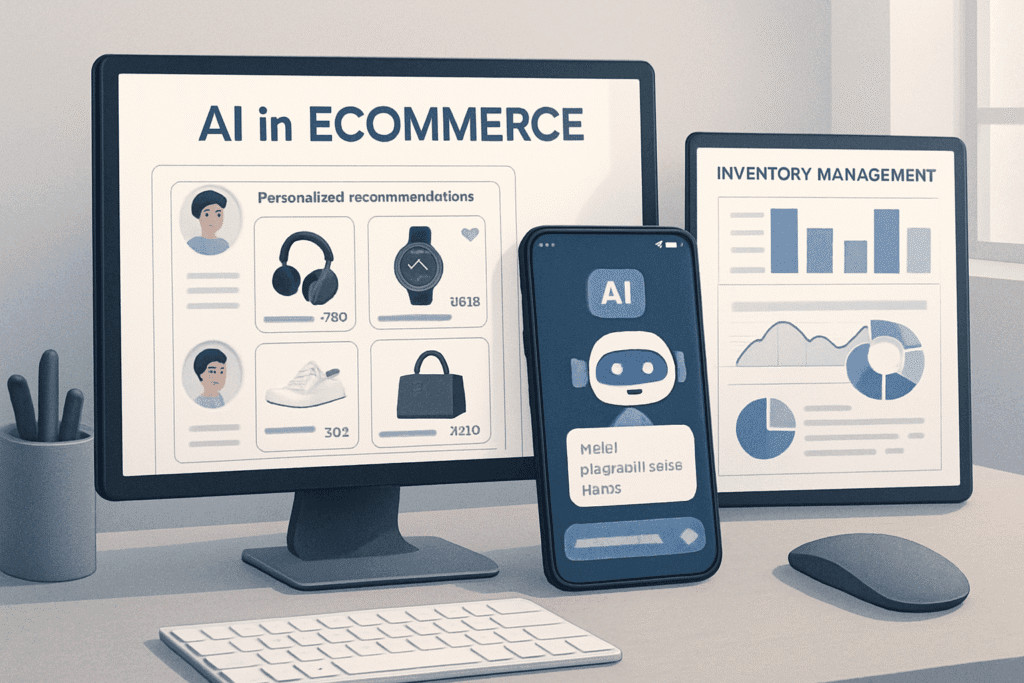
Have you ever shopped online and felt like the site knew exactly what you wanted? That’s AI at work. In eCommerce, AI changes how we buy and sell. It makes shopping personal, helpful, and efficient. This article explores AI’s role in personalization, chatbots, and inventory. You’ll get practical tips and insights. Whether you’re a business owner or a shopper, these ideas will help you understand AI’s impact. Let’s dive in.
The Power of AI Personalization in eCommerce
AI personalization tailors shopping to each user. It uses data like past buys and browsing habits. This creates unique experiences. For example, Amazon suggests items based on what you’ve viewed. This boosts sales and keeps customers happy.
Why does this matter? Studies show AI personalization can raise conversion rates by up to 10%. That’s a big win for stores. In 2025, the global AI market in eCommerce hits $9.01 billion. Much of that comes from smart recommendations.
How does it work? AI algorithms analyze data in real time. They predict what you might like next. Think of Netflix, but for shopping. Retailers like Shopify use AI to customize emails and product pages. This leads to higher engagement.
But be careful. Not everyone loves it. About 34% of older shoppers feel uneasy with AI suggestions. So, balance tech with privacy. Offer opt-out options. This builds trust.
Tips for businesses: Start small. Use free tools to track user behavior. Then, apply AI for targeted ads. Customers return more when they feel understood. For shoppers, enjoy the ease. But check privacy settings.
In short, personalization turns generic sites into personal helpers. It drives loyalty and growth.
Chatbots: Your 24/7 eCommerce Assistants
Chatbots are AI-powered chat tools on websites. They answer questions anytime. No waiting for human help. This is key in eCommerce, where quick responses matter.
Benefits are clear. Chatbots cut support costs by up to 30%. They also boost conversions by 35%. How? By guiding shoppers. For instance, they suggest products or handle returns.
Take H&M’s chatbot. It helps with sizing and styles. Customers get fast advice. Another example: Sephora’s bot offers makeup tips. This makes shopping fun and easy.
In 2025, 89% of companies test or use AI chatbots. They handle simple tasks like tracking orders. This frees staff for complex issues.
Trends show chatbots getting smarter. They use natural language. You can chat like with a friend. Plus, they personalize based on your history.
Tips: For stores, integrate chatbots with your CRM. Train them on common queries. Test often. Shoppers, use them for quick help. But escalate if needed.
Chatbots improve service without extra staff. They make eCommerce smoother for everyone.
Smart Inventory Management with AI
Inventory can make or break eCommerce. Too much stock ties up cash. Too little loses sales. AI fixes this with smart predictions.
AI forecasts demand using sales data and trends. It spots patterns humans miss. For example, it predicts holiday spikes. This keeps shelves stocked right.
In 2025, AI trends include real-time tracking. Tools automate orders when stock is low. This cuts waste. The AI retail market reaches $14.24 billion this year.
Examples: Walmart uses AI for supply chains. It reduces overstock by analyzing weather and events. Small shops benefit too. Platforms like Linnworks offer AI for demand forecasting.
Benefits: Lower costs and better accuracy. AI minimizes errors in stock levels. It also optimizes shipping.
Tips: Use AI software with your current system. Monitor data quality. Start with one product line. Adjust based on results. For buyers, this means fewer out-of-stock notices.
AI turns inventory from a headache to a strength. It supports growth without guesswork.
The Future of AI in eCommerce
AI keeps evolving. It blends personalization, chatbots, and inventory for seamless shopping. Expect more voice search and visual tools. AI agents will handle full purchases.
The impact is huge. eCommerce grows faster with AI. Revenue jumps, satisfaction rises. But ethics matter. Focus on data security.
For lifelong learners, stay updated. Professionals, adopt AI early. Enthusiasts, experiment with tools.
Want to master AI? Check out the AI Mastery Plan. For more improvement, explore advanced skills.
AI in eCommerce is here to stay. It makes online shopping better for all.
FAQs
- What is AI personalization in eCommerce?
AI personalization uses data to tailor shopping experiences. It suggests products based on your habits. - How do chatbots help eCommerce stores?
Chatbots provide instant support. They answer questions and guide buys, cutting costs. - Why use AI for inventory management?
AI predicts demand and automates stock. This avoids shortages and saves money. - Is AI in eCommerce safe for privacy?
Yes, if done right. Always check settings and choose trusted platforms. - What are future AI trends in eCommerce?
Look for smarter agents and visual search. They will make shopping even easier.