
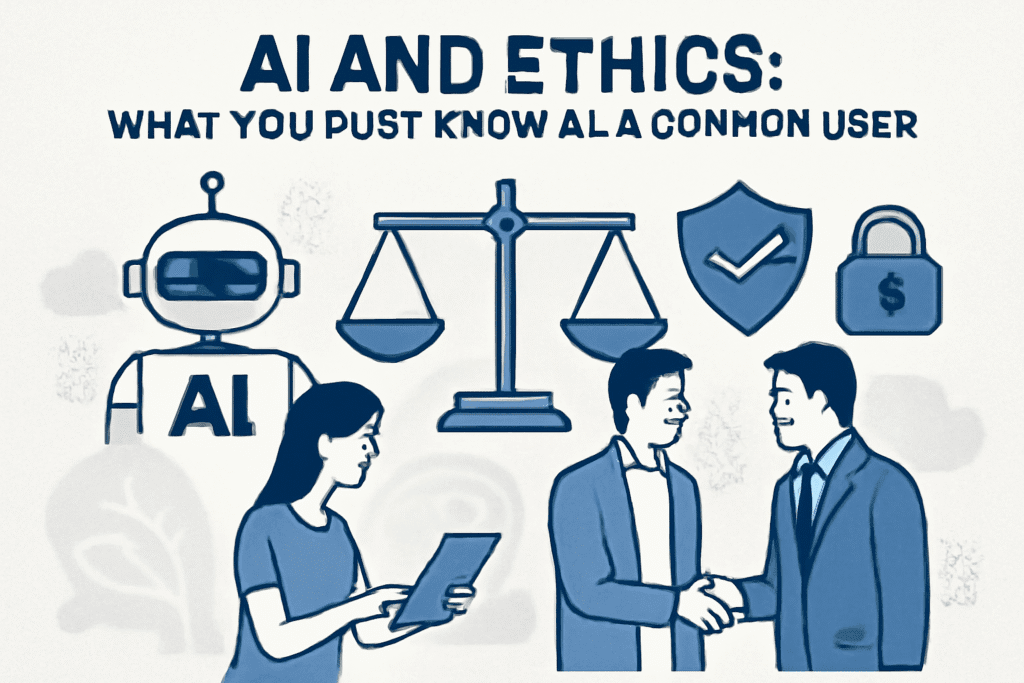
Ever wondered if AI is fair or safe to use? As AI grows in 2025, it’s part of our daily lives—think chatbots, recommendations, or smart devices. But with great power comes responsibility. AI ethics matter for everyone, not just tech experts. This article explains AI ethics in simple terms. You’ll learn key issues, practical tips, and real-world examples. Whether you’re a curious learner, professional, or tech fan, this guide helps you use AI wisely. Let’s get started.
Why AI Ethics Matter to You
AI ethics is about using AI responsibly. It ensures fairness, safety, and trust. As a common user, you interact with AI daily. From social media to online shopping, AI shapes your experience.
Why care? Unethical AI can harm. It might show biased ads or invade privacy. In 2025, 60% of users worry about AI misuse, per surveys. Understanding ethics helps you stay informed and safe.
For example, AI in hiring can favor certain groups if not checked. This affects job seekers. Knowing ethics empowers you to question AI systems.
Tip: Always check how AI collects your data. It keeps you in control.
Ethics matter because AI impacts your life. Stay aware to protect yourself.
AI and Bias: The Fairness Challenge
AI isn’t always neutral. It learns from data made by humans. That data can have biases. This leads to unfair outcomes.
For instance, in 2025, some AI tools in hiring still prefer men for tech roles. Why? They’re trained on old job data favoring men. This isn’t fair.
Another example: facial recognition. It sometimes misidentifies people with darker skin. This can lead to serious mistakes, like wrongful arrests.
What can you do? Ask companies about their AI’s fairness. Look for transparency. If you’re a user, report biased outputs. This pushes for change.
Tip: Choose platforms that audit AI for bias. It promotes fairness.
Bias is a big issue. But awareness helps fix it.
Privacy Concerns with AI
AI loves data. It uses your searches, likes, or voice commands to work better. But this raises privacy risks.
In 2025, AI collects tons of personal info. Think smart speakers or fitness apps. If mishandled, this data can leak. About 45% of users fear data breaches, studies show.
For example, some chatbots store your chats. If not encrypted, hackers could access them. Companies might also sell your data without clear consent.
Protect yourself. Read privacy policies. Use apps with strong security. Turn off data sharing when possible.
Tip: Check app permissions. Limit what AI can access. This keeps your info safe.
Privacy matters. Stay cautious to guard your data.
Transparency: Knowing When AI Is at Work
Ever talked to a bot thinking it was human? Lack of transparency causes confusion. Ethical AI should be clear about its role.
In 2025, laws push for AI disclosure. For example, customer service bots must say they’re not human. This builds trust.
But some companies hide AI use. They want seamless experiences. This can mislead users, especially in sensitive areas like mental health apps.
As a user, demand clarity. Look for labels like “AI-powered” on tools. If unsure, ask if you’re dealing with AI.
Tip: Use platforms that openly explain their AI. It ensures honest interactions.
Transparency is key. It helps you trust and understand AI.
Accountability: Who’s Responsible for AI?
When AI messes up, who’s to blame? This is a big ethical question. AI isn’t human, but its actions affect people.
In 2025, AI errors happen. About 20% of AI outputs have inaccuracies. Think of a wrong medical diagnosis or a bad loan decision. Someone must take responsibility.
Companies should own AI mistakes. They build and train the systems. But users also play a role. If you rely blindly on AI, you risk errors.
Tip: Double-check AI outputs. Don’t trust them fully. Report issues to improve systems.
Accountability ensures AI serves users, not harms them.
AI in Everyday Life: Ethical Examples
AI ethics show up in daily tools. Let’s look at examples. In 2025, Spotify’s AI suggests songs based on your tastes. If it only pushes certain artists, that’s bias. Ethical AI would offer diverse options.
Another case: smart home devices. They listen to commands. Ethical ones delete recordings unless you opt in. Unethical ones might share your voice data.
Social media is big, too. AI curates your feed. If it spreads false info, it’s unethical. Platforms like X aim to balance this with better algorithms.
Tip: Choose ethical AI tools. Look for companies prioritizing fairness and privacy.
These examples show ethics in action. They guide your choices.
How to Use AI Ethically as a User
You have power as an AI user. Your choices shape how AI evolves. Here’s how to use it ethically.
First, stay informed. Learn how AI works in apps you use. Second, protect your data. Adjust privacy settings. Third, question AI outputs. If something feels off, check it.
In 2025, ethical AI use is growing. Users push for fairness. For example, reporting biased ads helps companies improve.
Tip: Join AI communities. Share feedback. It drives ethical changes.
Your actions matter. Use AI to do good, not harm.
The Future of AI Ethics
AI ethics will keep evolving. By 2030, stricter rules may govern AI. Users will demand more control. In 2025, trends show focus on fairness and transparency.
Future AI might explain its decisions better. This helps users trust it. Companies will invest in ethical training for AI developers.
As a user, stay proactive. Keep learning. Advocate for fair AI. This shapes a better future.
Tip: Follow AI ethics news. It keeps you ready for changes.
The future is bright if we prioritize ethics. You play a role.
Empowering Yourself with AI Ethics
AI ethics aren’t just for experts. They’re for you. Understanding bias, privacy, and transparency helps you use AI safely. In 2025, ethical AI builds trust and fairness.
Learners, dive into AI ethics basics. Professionals, apply ethical practices at work. Enthusiasts, champion responsible AI use.
Want to learn more? Check out the AI Mastery Plan. For more improvement, explore AI skills.
AI is powerful. Use it ethically to make a difference.
FAQs
- What are AI ethics?
AI ethics ensure AI is fair, safe, and transparent for users. - How does AI bias affect me?
Bias can lead to unfair treatment, like wrong ads or job rejections. - Can I protect my privacy with AI?
Yes. Check app permissions and limit data sharing. - Why is AI transparency important?
It builds trust. You should know when you’re using AI. - How can I use AI ethically?
Stay informed, question outputs, and choose fair platforms.